FAMILY TRANSPORT GUIDE
A Sri Lanka family private driver should make the holiday calmer before the vehicle even moves.
The right booking begins with a restraint that fits the child, a vehicle that genuinely carries the stroller and cases, and a driver who is comfortable building breaks into the route.
That sounds obvious, yet family bookings often begin with a passenger count—two adults and two children—then jump directly to a day rate.
The missing details are where discomfort appears: a child seat that cannot be identified, a six-seat van with almost no boot space when all rows are upright, weak rear cooling, or a schedule that assumes children can sit through every long road section without stopping.
This guide explains how to choose a family-friendly vehicle and driver, how to write a useful quote request and how to compare the evidence. If you are still deciding whether private transport suits the whole trip, first read the seven-day private-driver route for first-time visitors and the broader 2026 cost guide.
REAL TAXI-CHARTER GUESTS
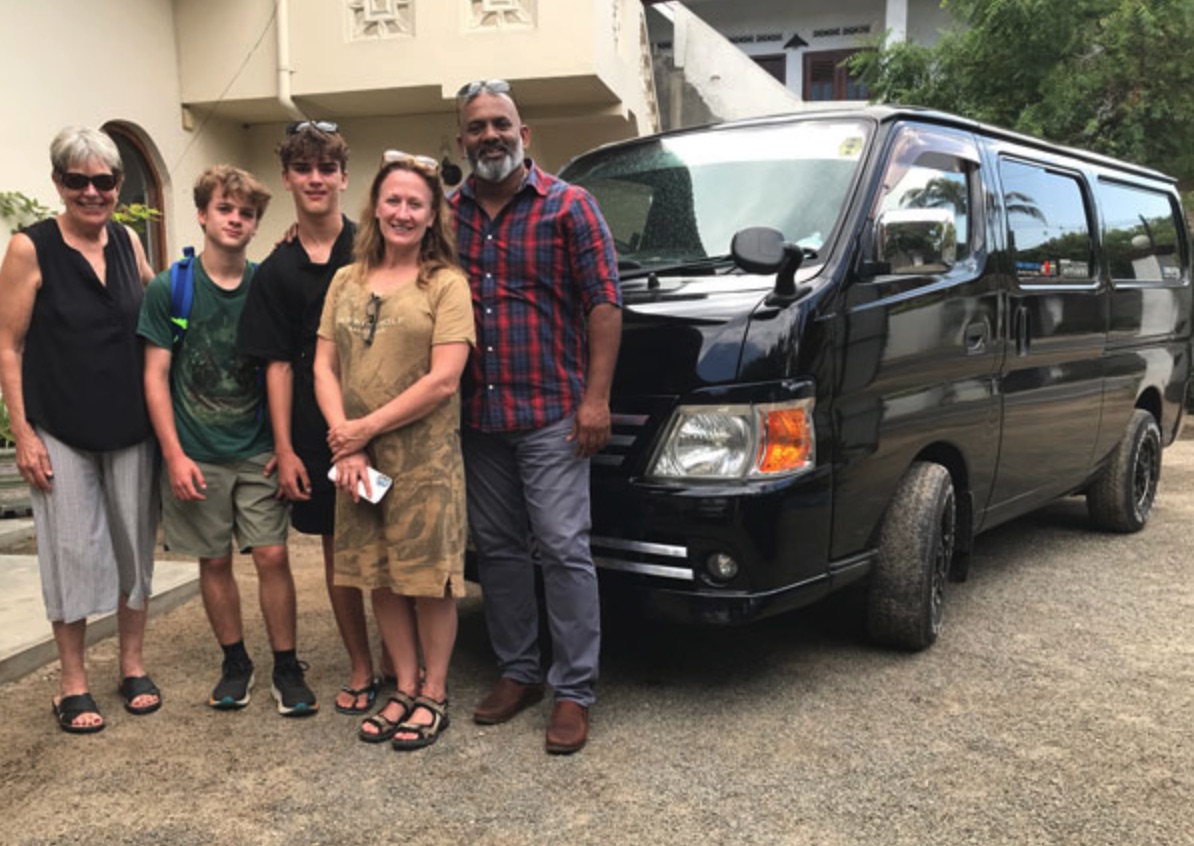
Real families at the start of a Sri Lanka charter
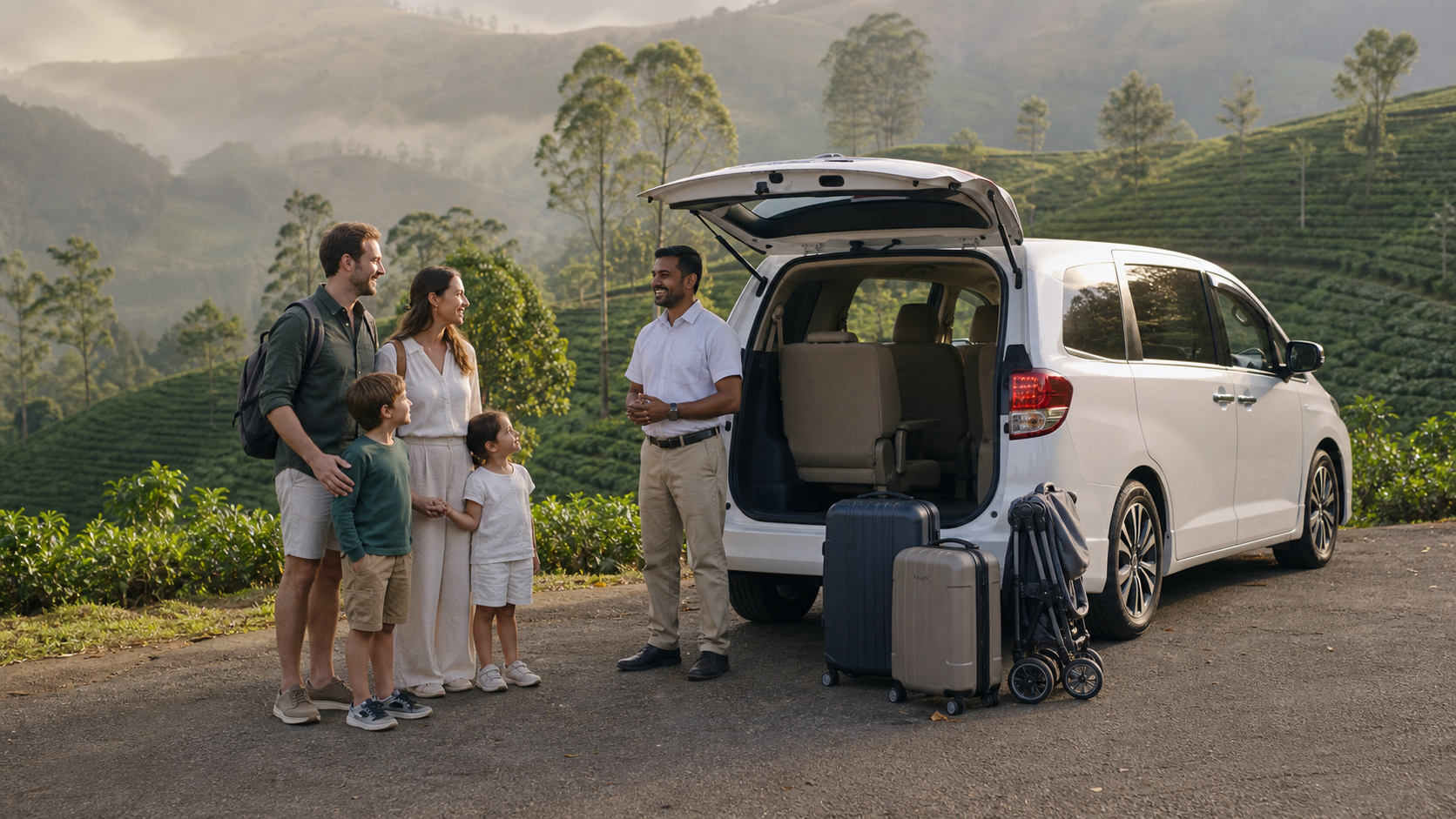
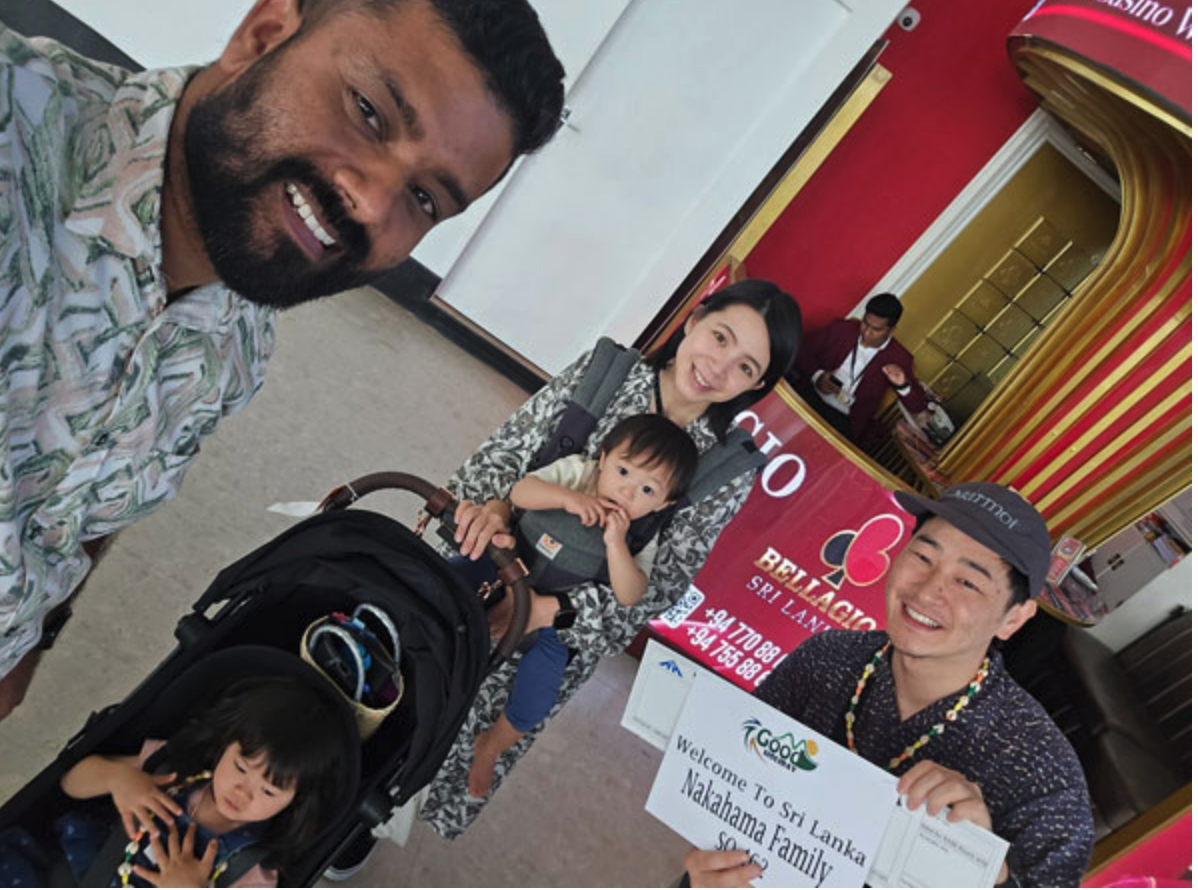
These genuine guest photographs show two common opening moments: meeting the driver at the airport with family equipment and using a private vehicle for a flexible sightseeing day.

Sri Lanka with kids: the short answer
For most families moving between several regions, one private vehicle can be a realistic alternative to rebuilding every transfer around trains, buses, tuk-tuks and hotel taxis. It keeps the child’s everyday bag close, reduces repeated loading, allows door-to-door hotel changes and makes an unscheduled toilet or meal stop much easier.
Sri Lanka Tourism notes that travel around the compact island can still be time-consuming and publishes multi-hour road estimates between Colombo and major destinations. That matters more with children because three hours on a planning chart is not the same as three uninterrupted hours in a vehicle.
Treat every long transfer as a family day with a start time, a break plan and an acceptable arrival window—not simply as distance to be completed. Official Sri Lanka transport guidance.
Child restraint
Confirm the seat type, installation method and usable rear belt before the trip.
Real capacity
Count people, child seats, suitcases, stroller and day bags—not seats alone.
Climate comfort
Check rear air-conditioning, sunshades and clean, usable seating.
Family pace
Agree rest breaks, meal timing and a realistic daily driving limit.
Why a family booking needs a different standard
Adults can tolerate a compromised transfer for one day. A young child can turn the same compromise into the defining feature of the holiday.
Heat builds quickly in a stationary vehicle, motion sickness can be aggravated by hill-country bends, and a seat that looked generous in a listing can feel very small once a restraint occupies one side and bags enter the cabin.
The right question is therefore not, ‘How many seats does the vehicle have?’ It is, ‘How many comfortable belted positions remain after the correct restraint is installed and all luggage is stored away from passengers?’ A driver who has carried families before should understand the distinction and be willing to show it with recent photographs.
Also separate driving from guiding. Some families want stories, history and help interpreting cultural sites; others mainly need careful transport and prefer specialist guides only at selected places.
Our chauffeur guide versus tourist driver comparison explains the difference. Paying for the broader category only makes sense when the family will use it.
Make the child-restraint conversation specific
Do not ask only, ‘Do you have a child seat?’ That question can produce a sincere yes while leaving every important detail unresolved.
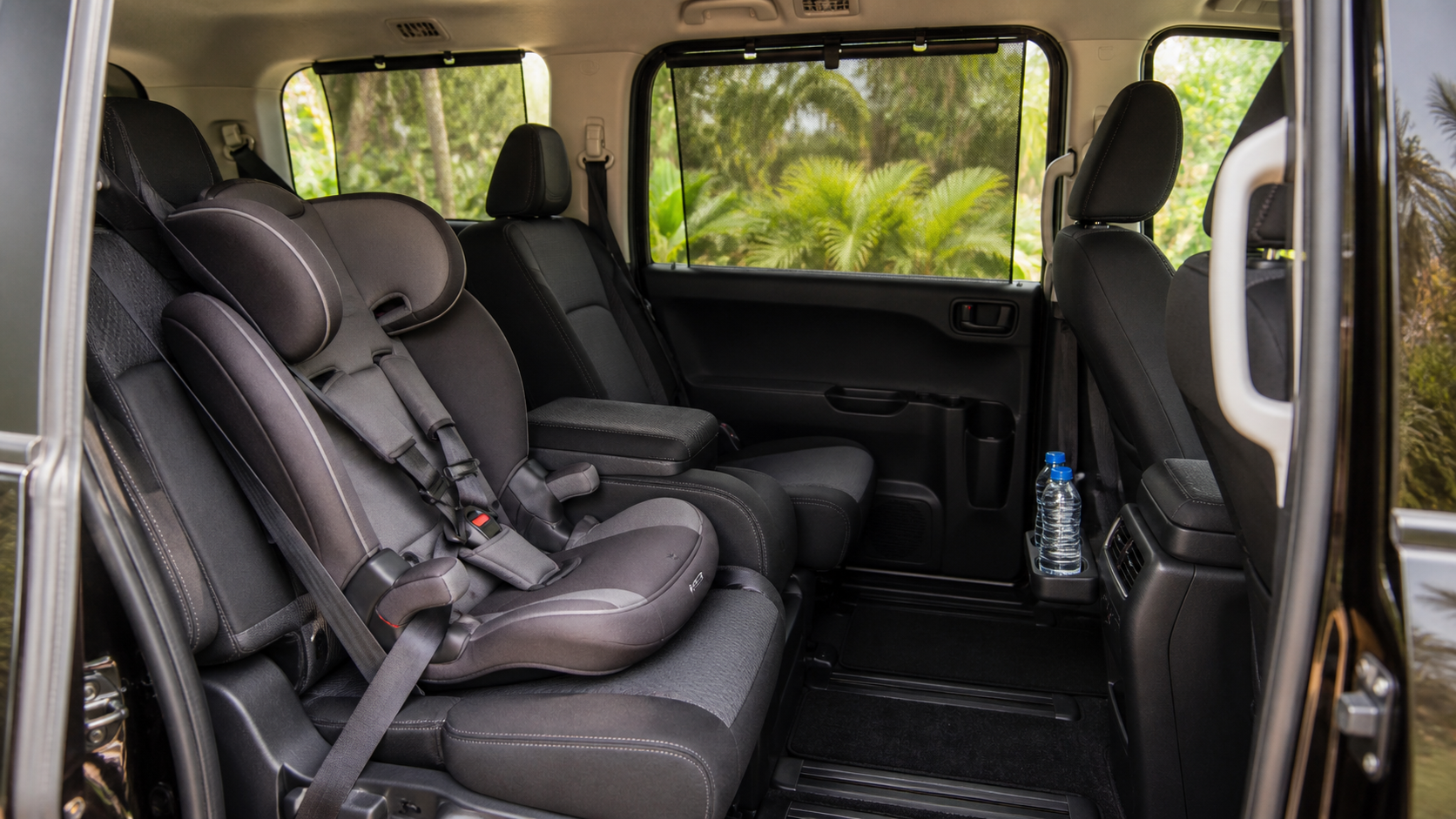
Provide the child’s age, approximate height and weight, then ask for the restraint type, a current photograph of the exact item, the direction in which it will be installed, and the belt or anchor method used in the quoted vehicle.
The World Health Organization’s 2023 Sri Lanka country profile records a national child-restraint law, while also noting that the profile does not identify an age or height threshold or a referenced restraint standard.
WHO’s wider occupant-restraint manual emphasizes that restraints need to be appropriate and used correctly. For a visiting family, the practical conclusion is simple: do not rely on a vague label or assume that local availability matches the seat used at home.
Questions to ask about the exact seat
- Is it rear-facing, forward-facing or a booster, and what child size is it intended for?
- Will this exact restraint be in this exact vehicle on the first day?
- Is it installed with a three-point belt or a compatible anchor system?
- Can the driver send a current photograph after installation, not a catalogue image?
- Has the restraint been involved in a crash or visibly damaged?
- Who is responsible for checking that the child is correctly secured each time?
Sri Lanka Police announced in 2026 that all drivers and passengers on expressways must wear seat belts, expanding beyond the ordinary-road requirement described for drivers and front occupants. Rules and enforcement can change, so check current guidance; regardless of the minimum legal position, every family member should have a usable restraint or belt for every road section.
Measure people and luggage together
A vehicle’s advertised capacity normally counts seats, not holiday equipment. A family of four may bring two large cases, two cabin bags, a folding stroller, a child carrier, a changing bag and several small backpacks.
If a rear bench must fold to create luggage space, the available passenger count changes. If bags sit loose beside children, the cabin is not functioning as promised.
Write the luggage list as carefully as the route. Use numbers and approximate sizes. Distinguish a compact umbrella stroller from a full-size travel system. Mention surfboards, wheelchairs, portable cots or large camera cases.
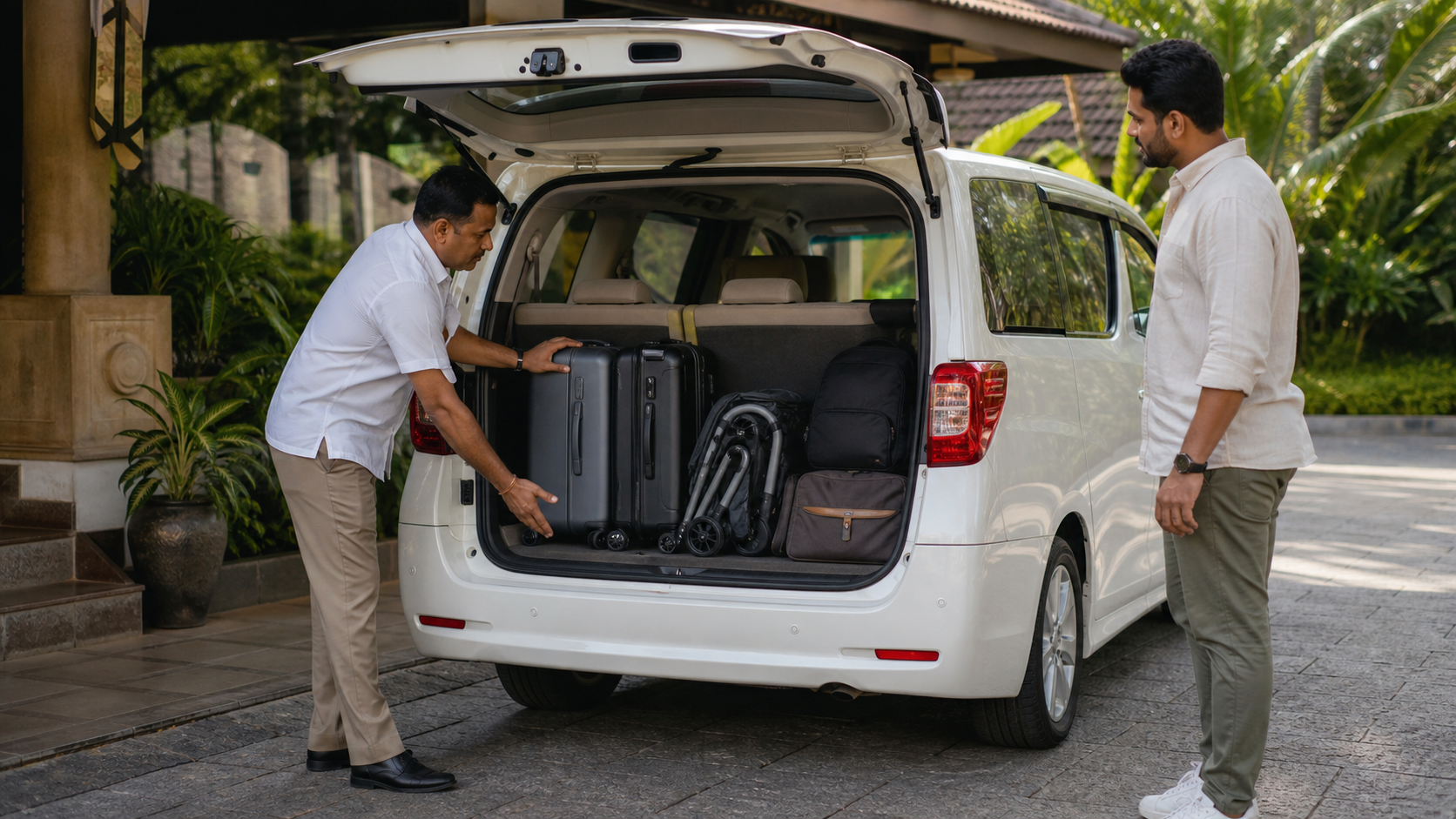
Then ask for a current photograph of the luggage area with every passenger row in the position that will be used.
A practical capacity test
Imagine the vehicle at Colombo Airport after a long flight. The restraint is already installed. Every suitcase is present. The stroller needs to remain accessible.
Can everyone sit in a properly belted place without bags under feet or in the aisle? Can the tailgate close without forcing the stroller against the glass?
If the answer cannot be shown in a photograph or explained clearly, compare a larger vehicle.
Choose the vehicle by the trip, not the label
Scroll horizontally to view all four columns →
| Vehicle | Possible family fit | Main risk | Confirm before booking |
|---|---|---|---|
| Sedan | Two adults and one child with light luggage | A restraint and stroller can consume the practical capacity | Boot photo, rear belt and installed-seat photo |
| SUV | Small family wanting easier ground clearance | Exterior size can exaggerate interior or boot space | Actual third-row and luggage arrangement |
| Minivan | Family of four or five with stroller and several cases | All seats upright may leave a shallow luggage area | Rear cooling, aisle, restraint position and boot depth |
| Large van | Extended family or large equipment list | Ride quality and access may vary | Step height, belts, AC coverage and exact vehicle |
Vehicle category names are helpful filters, not proof. Model, year, seat layout and luggage configuration determine the experience.
Ask what ‘or equivalent’ means. An acceptable substitute should preserve the number of belted places, restraint compatibility, luggage capacity, rear cooling and general condition—not merely have the same marketing category.
The same discipline applies to price. A larger vehicle may cost more, but the quote comparison guide shows why day rate alone is a poor measure. Fuel, tolls, parking, driver accommodation, included distance, duty hours and cancellation terms must be placed next to the vehicle evidence.
Inspect comfort features that matter in Sri Lanka
Rear air-conditioning
Ask whether cooling reaches the rear rows when the vehicle is fully occupied. A cold front vent does not prove that the child’s position remains comfortable.
Confirm that the system works, the vents are not blocked by bags and the driver is willing to adjust temperature rather than protecting a fixed fuel target.
Sun, windows and cleanliness
Sunshades or suitable window tint can reduce glare, but they must not interfere with visibility or local rules. Check that windows and doors operate properly. A clean cabin matters because food, sand and motion sickness are ordinary family realities; ask how the vehicle is prepared between trips without expecting clinical perfection.
Access and seating
Sliding doors are useful in narrow hotel entrances. A high step may be difficult for a toddler or grandparent travelling with the family.
Check whether the middle aisle remains usable after installing the restraint and whether an adult can sit beside a young child when needed.
FAMILY TRIP NEXT STEP
Compare the vehicle, child-seat option and driver—not only the day rate.
For this type of trip, LankaRide is useful because its directory can be filtered by vehicle type and child-seat availability, while profiles show service category and review evidence. Send the same passenger, child-age, luggage and route brief to more than one suitable driver so the replies remain comparable.
Availability and equipment differ by driver. Confirm the exact restraint, vehicle and written terms directly before travel.
Build rest breaks into the route
A good family driver does not treat every stop as a scheduling failure. Before travel, agree a default rhythm for breaks and make clear that the children may need an additional toilet, snack or calming stop.
The plan does not require a promise to stop anywhere at any time; it requires enough margin that a safe, suitable stop can be found without pressure.
Reduce motion-sickness pressure
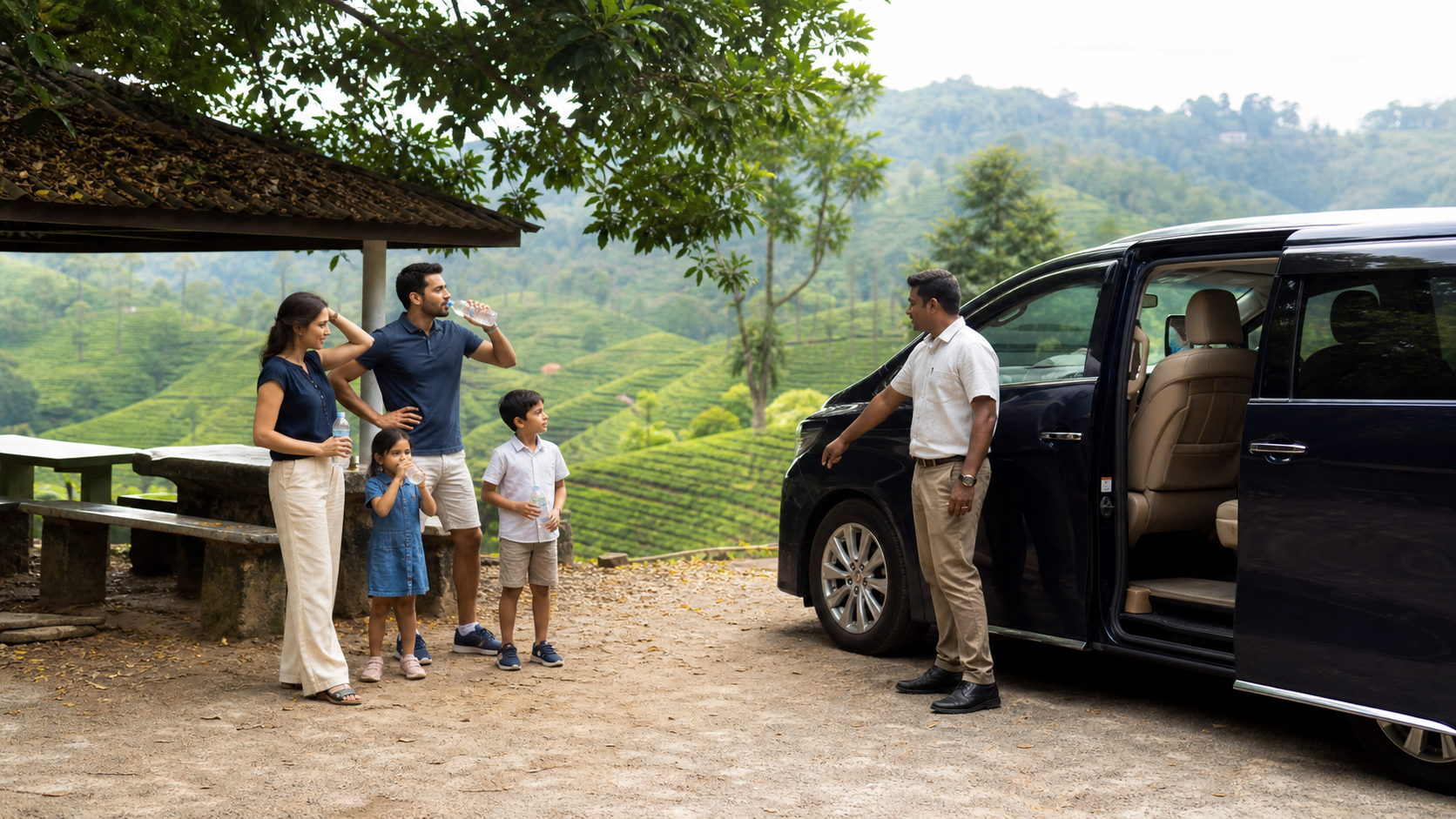
Hill-country roads around Kandy, Nuwara Eliya and Ella contain extended bends. Families who know a child is sensitive should tell the driver before the route is finalized. Ask for calmer driving, front-facing visibility where the restraint setup permits, regular fresh-air breaks and an easy-clean bag within reach. Medication questions belong with a qualified medical professional, not the driver.
Keep arrival days deliberately light
After a night flight, a long airport transfer may be possible but unwise. One quiet night near Negombo can protect the rest of the route.
When a same-day transfer is necessary, the quote should state the meeting method, expected start, planned break and realistic hotel arrival rather than treating the child as another piece of luggage.
REAL TAXI-CHARTER GUESTS
What family travel looks like in practice
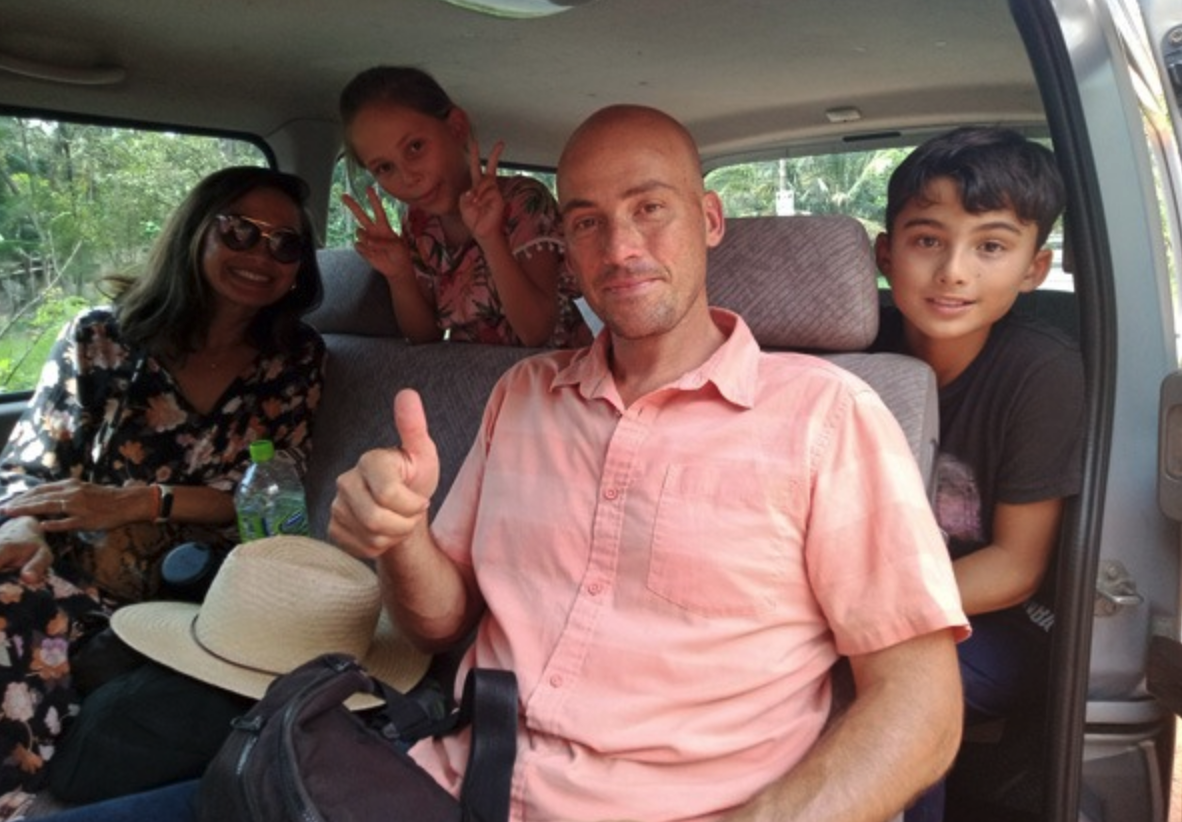
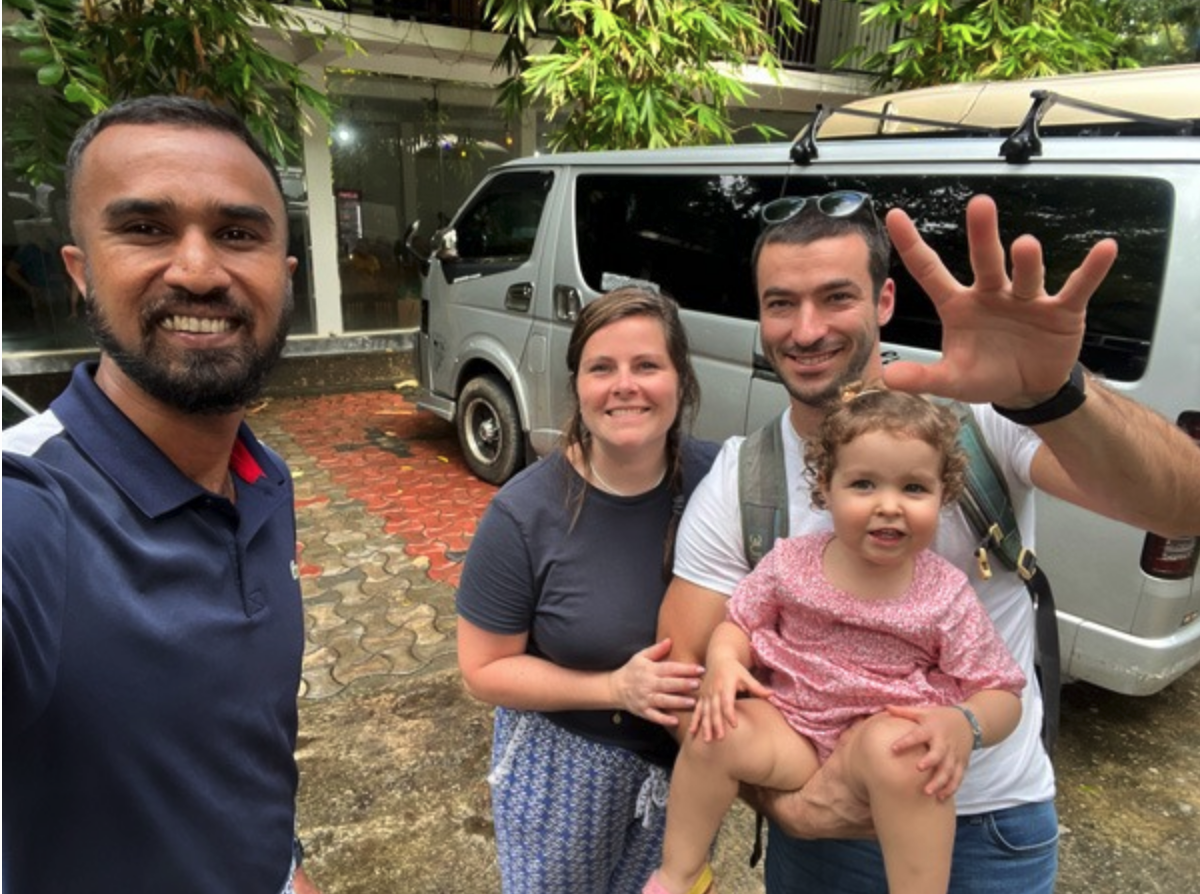
These genuine guest photographs show two practical details that listings often hide: how a family fits inside the cabin and the usable access and space needed when travelling with a toddler.
Choose the driver as carefully as the vehicle
A family-friendly driver is not someone who simply says they like children.
Look for specific behaviour in reviews and direct communication: calm driving, punctual airport meetings, patience with changes, clean vehicles, sensible route advice and a willingness to decline an unrealistic day.
Reviews from couples do not answer all family questions; prioritize accounts that mention children, elderly relatives, luggage or similar routes. Use the steps in our private-driver vetting guide: verify the current identity and credential, read recent route-specific reviews, confirm the actual vehicle and obtain written terms.
A guide-driver can add value for curious school-age children at cultural sites, while a transport-focused tourist driver may be the more proportionate choice for a beach, wildlife and hill-country route.
Interview questions for parents
- When did you last drive a family with children of similar ages?
- Which vehicle and child restraint will you use, and can you show both now?
- How do you normally plan stops on a four- or five-hour road day?
- What happens if a child becomes unwell or the family needs to shorten the day?
- Will you suggest shops or activities where you receive commission, and may we decline without pressure?
- If the driver or vehicle changes, how will the restraint and luggage capacity be rechecked?
Send a family brief that drivers can price accurately
A precise request does not need to be long. It needs to remove guessing. Use the same brief for every candidate so the resulting quotes can be compared like for like.
- Dates and route: arrival flight, every overnight town and final drop-off.
- Travellers: number of adults and children; each child’s age, height and approximate weight.
- Equipment: restraint requirement, stroller type, carriers and special items.
- Luggage: exact count of large cases, cabin bags and day bags.
- Vehicle: acceptable categories, rear AC, usable belts and access needs.
- Pace: preferred start times, expected break rhythm, nap or meal constraints.
- Service: transport only, chauffeur guiding or selected local guides.
- Quote: total price, inclusions, limits, payment and cancellation.
On LankaRide, the driver directory currently exposes filters for vehicle type and child-seat availability alongside driver category, location and language. Individual profiles can show available vehicle classes, service coverage and review sources.
This makes the platform useful as a comparison layer, but the family still needs to confirm the exact seat, installation and vehicle directly—the filter is a starting point, not a safety certification.
A family-friendly seven-day pace
The route below is an example of pacing, not a universal itinerary. It limits the number of hotel changes and avoids stacking a major attraction on top of every long transfer.
Families with toddlers may prefer fewer bases; older children may enjoy a more active cultural route. The private vehicle earns its value when it protects the chosen pace, not when it becomes permission to add another destination every day.
REAL TAXI-CHARTER GUESTS
Family taxi-charter moments later in the journey
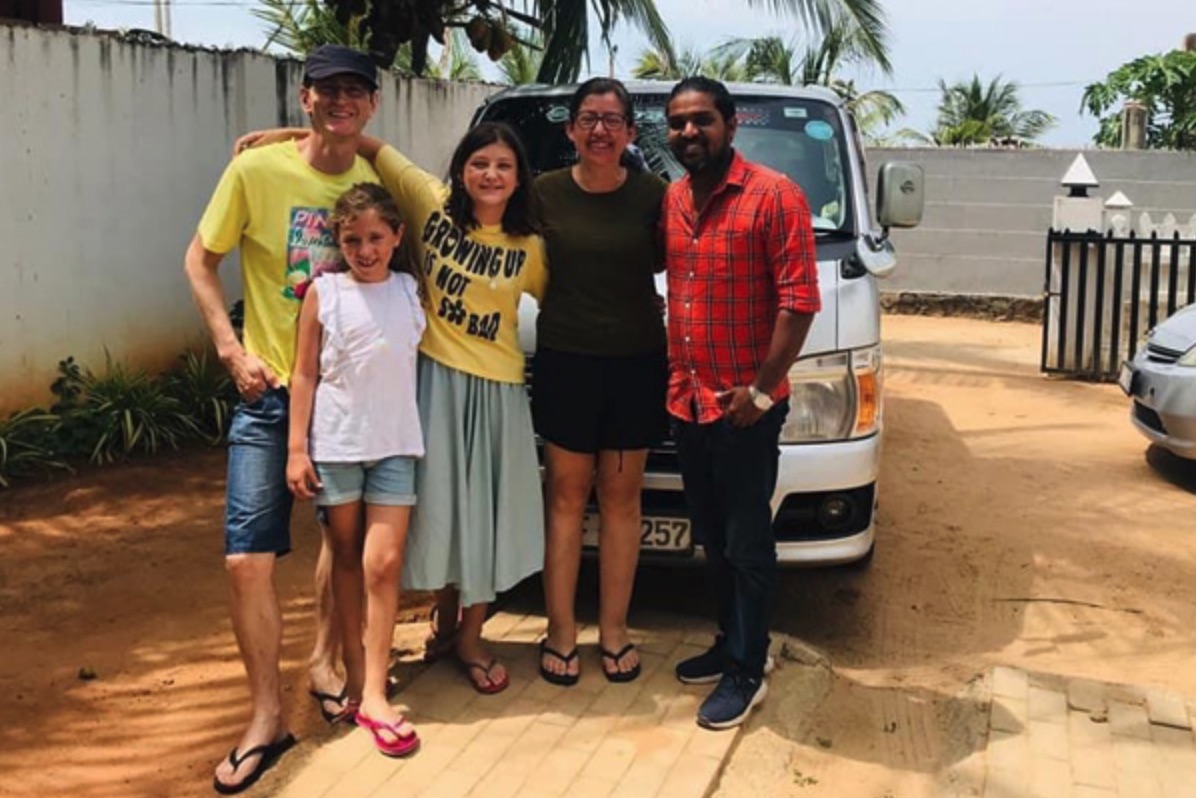
These real guest photographs show why vehicle space and a steady driver continue to matter after the airport pickup and first sightseeing days.
Compare several complete quotes
Send the identical brief to two or three suitable profiles. Compare the total, vehicle, restraint, luggage evidence, hours, included kilometres, driver nights and cancellation terms.
A low quote in a sedan is not comparable with a slightly higher quote in a minivan if the sedan cannot carry the stated equipment comfortably.
LankaRide offers a multiple-quote request, and its review area can help identify evidence beyond a headline star score. From an editorial perspective, the useful feature is not bargain hunting; it is the ability to compare drivers, qualifications, vehicles and responses against the same family requirement before choosing.
- Children’s ages, heights and approximate weights are included in the request.
- The exact restraint or booster type is named; a current photo is supplied.
- The quoted vehicle has usable rear seat belts and enough space around the seat.
- Every suitcase, stroller, carrier and special item appears in the luggage list.
- Rear air-conditioning, sun protection and planned comfort stops are confirmed.
- The written quote covers route, hours, kilometres, tolls, parking and driver nights.
- The named driver, vehicle and any substitution rule are clear before arrival.
Frequently asked questions
Do Sri Lanka private drivers provide child seats?
Some do, and the LankaRide directory currently includes a child-seat filter. Availability, restraint type and condition vary.
Confirm the exact item with a current photograph and verify the installation method in the booked vehicle.
Is a sedan enough for two adults and two children?
Sometimes, but it is often the wrong starting assumption when a restraint, stroller and several suitcases are involved. Ask for a boot photograph and a full capacity plan. A minivan may provide better value when it keeps luggage out of the passenger space.
Should we book a chauffeur guide for children?
Choose one when professional interpretation will improve the family’s cultural days and the children are interested in the explanations. For a route led by beaches, wildlife and independent exploration, a transport-focused driver plus selected site guides can be more economical.
Can the driver stop whenever our child needs a break?
A private vehicle offers more flexibility than a fixed bus or train, but safe stopping places are not available everywhere. Agree a generous break approach and realistic daily schedule rather than expecting an immediate stop on any road.
Should we bring our own child seat?
It can be a good option when the child is comfortable in a familiar restraint and the airline and vehicle arrangements work. Confirm local belt or anchor compatibility before carrying it.
A seat from home is not useful if it cannot be installed correctly in the booked vehicle.
Final verdict
Sri Lanka with kids becomes easier when transport decisions are made around the family’s real day. Specify the child, restraint, luggage and route. Confirm the exact vehicle and rear comfort. Choose a driver who gives clear answers and respects a flexible but safe pace.
Then compare complete written quotes rather than accepting the cheapest day rate.
A private driver cannot remove every delay, bend or tired afternoon. The right one can prevent those ordinary moments from becoming a daily negotiation. For a multi-stop family trip, that consistency is often the most practical reason to charter one vehicle for the route.

 English
  French
  Spanish
  German
  Chinese
  Arabic